
Date
Share
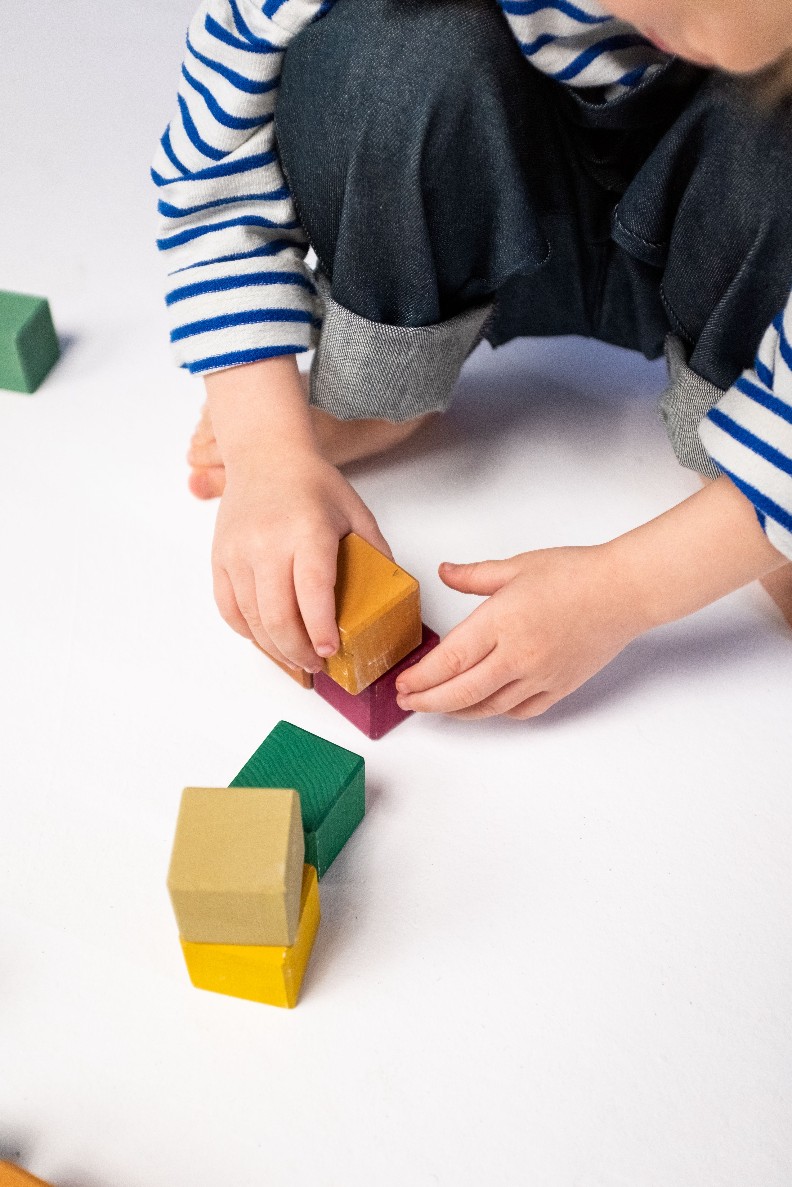
In speech-language pathology, it can be tempting to equate effective intervention with highly structured activities, carefully selected targets, and measurable drills. While direct instruction certainly has its place, decades of research continue to support a fundamental principle of pediatric intervention: children learn language best through meaningful, engaging interactions. Child-led play is more than a reinforcement activity or a break from structured therapy; it is a clinically valuable context for language learning.
Play Provides Functional Opportunities for Language
Unlike rote tasks, play naturally embeds opportunities to target a wide range of communication goals. Vocabulary, grammar, social communication, executive functioning, and narrative skills emerge within activities that are motivating and meaningful to the child.
Because the child determines the direction of play, communication becomes purposeful rather than prompted. Requests, comments, problem-solving, turn-taking, and conversational exchanges occur in authentic contexts, increasing the likelihood that newly learned skills will generalize beyond the therapy room.
Following the Child's Lead Increases Engagement
One of the most powerful therapeutic strategies is also one of the simplest: responding to the child's interests instead of directing every interaction.
When clinicians join a child's existing play scheme, they create opportunities to model immediately relevant language. This approach reduces performance demands while increasing attention, engagement, and communicative intent.
Rather than relying on a rapid series of questions, clinicians can support language development through strategies such as:
- Linguistic mapping
- Self-talk and parallel talk
- Recasting and expansion
- Focused stimulation
- Strategic modeling of functional vocabulary
These evidence-based techniques provide rich language input without interrupting the natural flow of interaction.
Play Supports More Than Communication
Speech-language intervention rarely targets language in isolation. Successful communication depends on a variety of underlying cognitive and social processes that are strengthened through play.
Child-led play provides opportunities to support:
- Joint attention
- Symbolic play development
- Executive functioning
- Cognitive flexibility
- Problem-solving
- Social reciprocity
- Emotional regulation
As these foundational skills improve, children are better equipped to participate in meaningful communication across settings.
Clinical Implications
As clinicians, it is important to remember that highly engaging therapy does not mean therapy is less rigorous. In many cases, play-based intervention requires greater clinical decision-making than structured tasks. It demands careful observation, responsive language modeling, and intentional goal selection within dynamic interactions.
The objective is not simply to "play with the child," but to create communication opportunities that are functional, individualized, and developmentally appropriate.
Final Thoughts
As the field continues to emphasize evidence-based and family-centered practice, child-led play remains one of the most powerful tools available to pediatric speech-language pathologists. When therapy is built around meaningful interaction rather than isolated performance, children have greater opportunities to develop communication skills that extend far beyond the therapy room.
Sometimes the most effective intervention is not introducing another worksheet or game; it is recognizing the therapeutic value already present in a child's play.
Date
Share
In speech-language pathology, it can be tempting to equate effective intervention with highly structured activities, carefully selected targets, and measurable drills. While direct instruction certainly has its place, decades of research continue to support a fundamental principle of pediatric intervention: children learn language best through meaningful, engaging interactions. Child-led play is more than a reinforcement activity or a break from structured therapy; it is a clinically valuable context for language learning.
Play Provides Functional Opportunities for Language
Unlike rote tasks, play naturally embeds opportunities to target a wide range of communication goals. Vocabulary, grammar, social communication, executive functioning, and narrative skills emerge within activities that are motivating and meaningful to the child.
Because the child determines the direction of play, communication becomes purposeful rather than prompted. Requests, comments, problem-solving, turn-taking, and conversational exchanges occur in authentic contexts, increasing the likelihood that newly learned skills will generalize beyond the therapy room.
Following the Child's Lead Increases Engagement
One of the most powerful therapeutic strategies is also one of the simplest: responding to the child's interests instead of directing every interaction.
When clinicians join a child's existing play scheme, they create opportunities to model immediately relevant language. This approach reduces performance demands while increasing attention, engagement, and communicative intent.
Rather than relying on a rapid series of questions, clinicians can support language development through strategies such as:
- Linguistic mapping
- Self-talk and parallel talk
- Recasting and expansion
- Focused stimulation
- Strategic modeling of functional vocabulary
These evidence-based techniques provide rich language input without interrupting the natural flow of interaction.
Play Supports More Than Communication
Speech-language intervention rarely targets language in isolation. Successful communication depends on a variety of underlying cognitive and social processes that are strengthened through play.
Child-led play provides opportunities to support:
- Joint attention
- Symbolic play development
- Executive functioning
- Cognitive flexibility
- Problem-solving
- Social reciprocity
- Emotional regulation
As these foundational skills improve, children are better equipped to participate in meaningful communication across settings.
Clinical Implications
As clinicians, it is important to remember that highly engaging therapy does not mean therapy is less rigorous. In many cases, play-based intervention requires greater clinical decision-making than structured tasks. It demands careful observation, responsive language modeling, and intentional goal selection within dynamic interactions.
The objective is not simply to "play with the child," but to create communication opportunities that are functional, individualized, and developmentally appropriate.
Final Thoughts
As the field continues to emphasize evidence-based and family-centered practice, child-led play remains one of the most powerful tools available to pediatric speech-language pathologists. When therapy is built around meaningful interaction rather than isolated performance, children have greater opportunities to develop communication skills that extend far beyond the therapy room.
Sometimes the most effective intervention is not introducing another worksheet or game; it is recognizing the therapeutic value already present in a child's play.