Date
Share
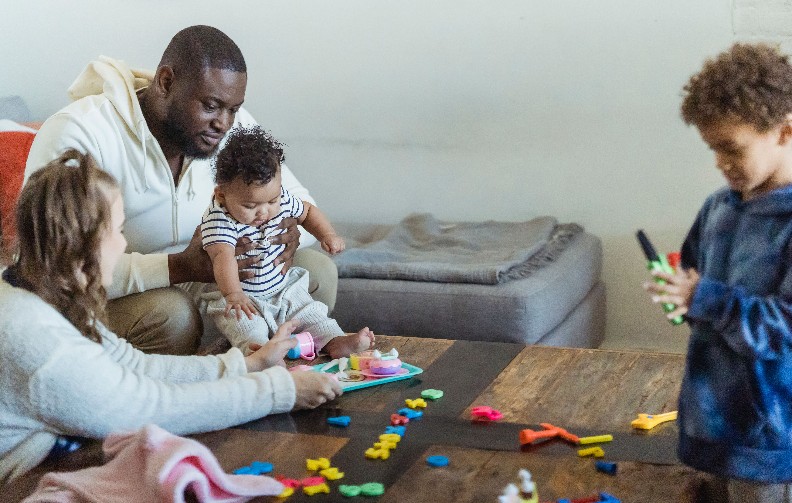
Who says language therapy can only happen during a structured therapy session? This is simply not true! We can target language skills in everyday activities.
Here is a list of language skills you can target during real life scenarios:
Category:
Categorization used to group people, things, or items by shared traits. Demonstrating understanding and the ability to categorize is often a goal for the populations we serve. One way we can target categories at home is to name at least three furniture items (i.e., couch, chair, bed) and toys (i.e., ball, doll, toy car). You can even get more specific and name specific items found in a kitchen (refrigerator, microwave, oven), bathroom, or backyard area.
Verbs, Nouns, Adjectives:
A child being able to label and describe the difference between a verb, noun, and adjective is important language skill to have. You can target this goal by watching a child-friendly television show. You can ask the child to name the main character. Follow this question up by asking if the word is a noun, verb, or adjective. You can then ask them to label what action the character is doing. This can range from singing, dancing, talking, eating, etc. To finish this off, ask the child to list an adjective. An adjective is used to describe something! The child can talk about the character's emotion, what color they are wearing, and/or the character's skin tone (i.e., SpongeBob is yellow, Mr. Crabs is red, etc.).
Following Directions:
This language skill targets the child's ability to comprehend a task that is ordered for them to complete. As a caregiver, it is probably easy to think of many directions that your child may have difficulty following such as cleaning their room, taking out the dog, or going to bed. It is very important to break these directions down for children with language impairments. You can target this by saying, "gather your uncleaned clothes then place them in the laundry basket" or "get your comforter and sheets and place it back on your bed." You can even provide a visual example by letting your child help you make up your own bed and/or doing the laundry!
These are just a few language skills to target with your child. If you would like more resources, do not hesitate to talk with your child's speech language pathologist for additional tips and tricks!
Va'Keria Miles, M.S., CCC-SLP
Date
Share
Who says language therapy can only happen during a structured therapy session? This is simply not true! We can target language skills in everyday activities.
Here is a list of language skills you can target during real life scenarios:
Category:
Categorization used to group people, things, or items by shared traits. Demonstrating understanding and the ability to categorize is often a goal for the populations we serve. One way we can target categories at home is to name at least three furniture items (i.e., couch, chair, bed) and toys (i.e., ball, doll, toy car). You can even get more specific and name specific items found in a kitchen (refrigerator, microwave, oven), bathroom, or backyard area.
Verbs, Nouns, Adjectives:
A child being able to label and describe the difference between a verb, noun, and adjective is important language skill to have. You can target this goal by watching a child-friendly television show. You can ask the child to name the main character. Follow this question up by asking if the word is a noun, verb, or adjective. You can then ask them to label what action the character is doing. This can range from singing, dancing, talking, eating, etc. To finish this off, ask the child to list an adjective. An adjective is used to describe something! The child can talk about the character's emotion, what color they are wearing, and/or the character's skin tone (i.e., SpongeBob is yellow, Mr. Crabs is red, etc.).
Following Directions:
This language skill targets the child's ability to comprehend a task that is ordered for them to complete. As a caregiver, it is probably easy to think of many directions that your child may have difficulty following such as cleaning their room, taking out the dog, or going to bed. It is very important to break these directions down for children with language impairments. You can target this by saying, "gather your uncleaned clothes then place them in the laundry basket" or "get your comforter and sheets and place it back on your bed." You can even provide a visual example by letting your child help you make up your own bed and/or doing the laundry!
These are just a few language skills to target with your child. If you would like more resources, do not hesitate to talk with your child's speech language pathologist for additional tips and tricks!
Va'Keria Miles, M.S., CCC-SLP