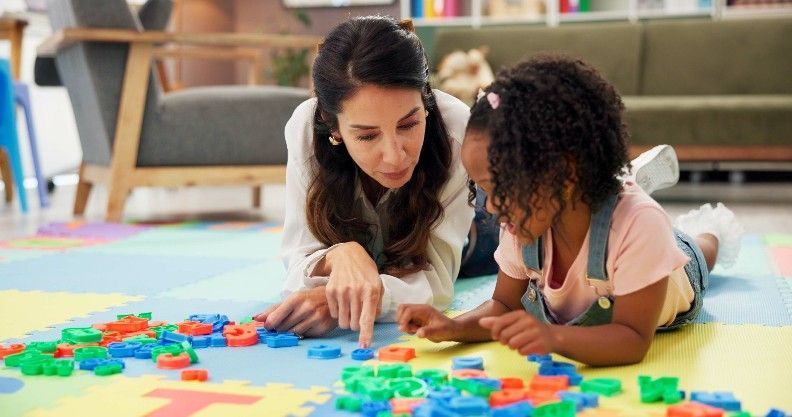
Consistency in speech therapy isn’t just helpful; it’s essential, especially for children who may not experience stability at home. For many students, school is the most predictable environment they have, and speech therapy can become a safe anchor in their week. Same therapist, same routine, same expectations. That predictability helps lower anxiety and creates the emotional safety kids need in order to learn. Research supports this. Studies have shown that consistent therapeutic relationships improve engagement, behavior regulation, and learning outcomes in children, particularly those with language delays or social communication needs (Bruner; Mashburn et al.). When students don’t have to adjust to a new clinician or relearn routines every few months, therapy time can actually be spent working on goals instead of rebuilding trust. In practice, consistency looks like a child who initially refuses to talk slowly beginning to participate because they know what to expect. It looks like a student who struggles with regulation walking into the speech room and calming almost immediately because the space and person feel familiar. It looks like an SLP noticing subtle changes in speech patterns, behaviors, or confidence because they’ve worked with the same child over time. Those small observations often lead to better goal adjustments and stronger progress. Consistency also supports carryover. When students see the same therapist regularly, strategies are reinforced across sessions and are more likely to generalize into the classroom. Teachers are more likely to collaborate when they know who to go to, and students benefit from aligned expectations. According to the American Speech Language Hearing Association, continuity of care is a key factor in effective intervention and long-term outcomes for school-based services. For children who may not have consistency at home, having at least one adult who reliably shows up matters more than we can measure. Showing up week after week sends a message that goes beyond speech goals. It tells students they are seen, supported, and worth the time. Sometimes the most powerful part of therapy isn’t the activity or data point, it’s the consistency behind it. Madison Wood M.S., CCC-SLP

Need new ideas for telehealth sessions? Well, look no further! Check out these interactive and innovative websites that are designed to keep students focused during virtual sessions. Boom Cards Boomcards.com offers plenty of interactive flashcards with different activities. You can target sounds in all word positions, phonemic awareness, or even language activities such as WH-questions! You can also create your own Boom Cards tailored to specific lessons you would like to teach your students. Ultimate SLP The ultimateslp.com website provides activities for almost every speech and language goal. You can target articulation, fluency, language, social communication... you name it! Ultimate SLP has amusing activities such as board games, arcade games, and even dress-up games! Pinkcatgames Pinkcatgames.com is another fun website that allows you to create your own questions. You can play games like tic-tac-toe, bingo, online coloring pictures, unscramble and more! PBS Kids Do your students enjoy PBS shows such as Arthur, Sesame Street, and Curious George? PBSKids.org has episodes and games that your students can interact with and enjoy! ABCya! ABCya.com is a learning website for students that supports a wide range of ages and grade levels. This website includes goal-enriched games that will keep your students entertained. Baamboozle Baamboozle.com is a great website for group therapy sessions! Your students will really enjoy the super-cool GIFs the website provides with the activities. YouTube Youtube.com offers so many educational videos that are helpful for our clients. They can watch videos on “how to say the R sound (bunched)” with Peachie Speechie or you can even have a book read aloud by StoryTime at Awnie’s House. I encourage SLPs to take a deep dive into the teletherapy websites listed above and explore new ways to help students succeed in speech therapy! Va'Keria Miles, M.S., CCC-SLP

"Hoppy" Spring! Holidays and seasonal activities provide great opportunities to address your child's goals from speech therapy, whether you are working on articulation/producing speech sounds or understanding & using language to communicate. This article will review ideas for language goals. One example of a common spring material you can utilize is Plastic Easter eggs! Easter eggs offer endless possibilities when it comes to targeting goals in therapy or working on carryover/generalization of skills at home in natural settings. Easter eggs can be purchased in the spring at most retailers, especially dollar stores! Below are a few ideas to help you get started on using your Easter eggs, starting with language. Enjoy! Language If your child is working on imitating actions, gestures, and/or sign language: Scatter/hide eggs and go on an egg hunt. Model using an index finger point and clapping when you find and egg. Create a requesting opportunity by placing eggs in sight but slightly out of reach. Model actions easy for child to imitate: shaking the egg, opening the egg, putting it in a basket. Use core sign language: HELP open the egg, request MORE eggs, and be ALL DONE as you put each egg in the basket. Try simple, 1-step directions: PUT IN the basket, GIVE ME the egg, PICK UP the egg. If your child is working on using first words: Hide small objects in the eggs. You can then work on comprehension by having your child point or grab a named object, or label what you find inside! Continue creating requesting opportunities by hiding eggs in sight but out of reach and modeling core words. Use predictable verbal routines! You can utilize games such as an egg toss, egg race on a spoon, or a treasure hunt and model single words and phrases of both nouns and words. E.g., ready, set, GO! when throwing an egg! Let your child pick which egg they want to get next by requesting specific colors of eggs or small toys to put in the eggs. If your child is working on expanding their sentences: Expand every word or phrase your child says. "Found it," can become, "Look, I found the green egg!" Model basic vocabulary concepts such as location, colors, numbers, and size. For example, "The big egg is UNDER the table!" Create challenges with egg hiding by giving directions: "Put the 2 small eggs next to the TV!" Act out silly actions and pretend play with the eggs to model action words to increase verb usage. For example, "I am cracking my egg to cook! Now I am feeding baby the egg!" Enjoy! Sarah Larsen, M.S., CCC-SLP