
"Hoppy" Spring! Holidays and seasonal activities provide great opportunities to address your child's goals from speech therapy, whether you are working on articulation/producing speech sounds or understanding & using language to communicate. This article will review ideas for language goals. One example of a common spring material you can utilize is Plastic Easter eggs! Easter eggs offer endless possibilities when it comes to targeting goals in therapy or working on carryover/generalization of skills at home in natural settings. Easter eggs can be purchased in the spring at most retailers, especially dollar stores! Below are a few ideas to help you get started on using your Easter eggs, starting with language. Enjoy! Language If your child is working on imitating actions, gestures, and/or sign language: Scatter/hide eggs and go on an egg hunt. Model using an index finger point and clapping when you find and egg. Create a requesting opportunity by placing eggs in sight but slightly out of reach. Model actions easy for child to imitate: shaking the egg, opening the egg, putting it in a basket. Use core sign language: HELP open the egg, request MORE eggs, and be ALL DONE as you put each egg in the basket. Try simple, 1-step directions: PUT IN the basket, GIVE ME the egg, PICK UP the egg. If your child is working on using first words: Hide small objects in the eggs. You can then work on comprehension by having your child point or grab a named object, or label what you find inside! Continue creating requesting opportunities by hiding eggs in sight but out of reach and modeling core words. Use predictable verbal routines! You can utilize games such as an egg toss, egg race on a spoon, or a treasure hunt and model single words and phrases of both nouns and words. E.g., ready, set, GO! when throwing an egg! Let your child pick which egg they want to get next by requesting specific colors of eggs or small toys to put in the eggs. If your child is working on expanding their sentences: Expand every word or phrase your child says. "Found it," can become, "Look, I found the green egg!" Model basic vocabulary concepts such as location, colors, numbers, and size. For example, "The big egg is UNDER the table!" Create challenges with egg hiding by giving directions: "Put the 2 small eggs next to the TV!" Act out silly actions and pretend play with the eggs to model action words to increase verb usage. For example, "I am cracking my egg to cook! Now I am feeding baby the egg!" Enjoy! Sarah Larsen, M.S., CCC-SLP

Evidence-Based Practice (EBP) is a term that many of us thought a lot about during our time as students, but how about now as practicing clinicians? It can be far too easy to let research slip away from the forefront of our minds and settle into comfortable routines of clinical practice. It is crucial that we remain plugged into the latest research to make sure that what we are doing is aligned with evidence-based practice. As defined by ASHA, EBP includes clinical expertise, internal and external evidence, and client perspectives. Here are a few ways to stay connected to high quality evidence while juggling all the other responsibilities of being an SLP: Collect sources that are applicable to the caseload that you serve. There are many wonderful resources available to us through the ASHA practice portal. Spend some time searching through the latest journals to find information that could benefit your students. Additionally, SIGs and organizations such as The Informed SLP take away some of the heavy lifting and create digestible forums already prepared. Keep a "practice bank." It is a great start to be sifting through evidence and articles galore, but what do we do with them afterwards? Transform your application of evidence by creating a system that works for you. Save journals in an organized fashion with notes that include assessment and treatment ideas, tools, and resources. Connect with SLP communities. Having a growth mindset means continual dedication and devotion to learning. Learning with others can make evidence feel transformative and "alive" instead of theoretical. Find professional virtual groups, local meet-ups, or communities of practice where evidence can become tangible. EBP doesn't have to be intimating or all-consuming. With a few intentional habits, you can stay plugged in to the latest research and be confident in clinical decisions. Hannah Collie, M.S., CCC-SLP
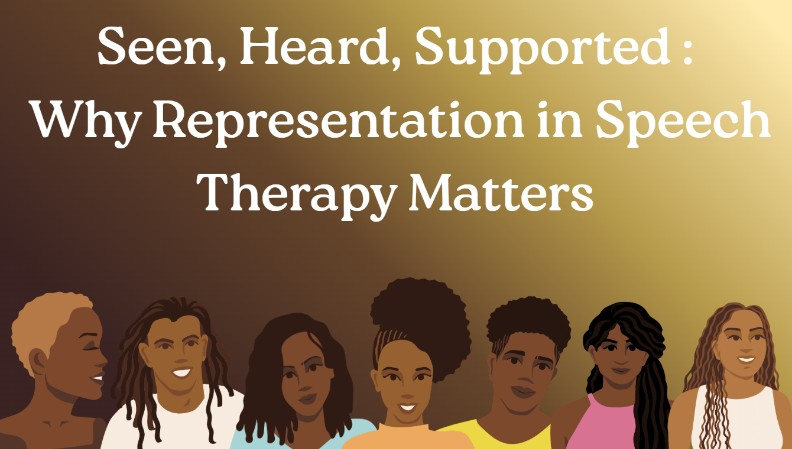
During MLK Week, I read a book about Dr. Martin Luther King Jr. to some of my students and incorporated it into our speech and language goals. As I was reading to one of my third-grade students who hates coming to speech and hopes every time I come to pick him up that I will forget, he suddenly stopped me and said, “Wow… he did all of that?” I smiled and said, “Yes, and he looked just like you.” We talked about how Dr. King gave powerful speeches and helped shape the world we live in today. I emphasized how hard he worked in school and how much he valued education. I also shared that Dr. King intentionally worked on his voice and communication. I explained that this is exactly why speech therapy matters, because I want to help him use his voice in a way that can have impact, just like Dr. King did. My journey into this field began with my son, who had a language delay when he was younger. Along the way, I encountered stigma and comments suggesting we should “wait it out” or that he would “grow out of it” like other children. Unfortunately, that is not everyone’s story. What we now know is that early intervention is key. Speech therapy changed my life. My son is now excelling both developmentally and academically, and I went on to earn my master’s degree in speech-language pathology. As a Black speech-language pathologist, I know how powerful it is for children to see someone who looks like them helping them find their voice. Representation matters. When Black students see Black professionals in supportive roles, it helps break down fear, stigma, and shame. So many amazing Black Americans did not start out with perfect communication skills. Dr. King trained his voice and pacing. Shaquille O’Neal had a childhood stutter. Kendrick Lamar has spoken about communication struggles growing up. James Earl Jones, the iconic voice of Mufasa from Disney's The Lion King, had a severe stutter. Even LeBron James has discussed speech anxiety early in his career. The common thread is support. Needing help is nothing to be embarrassed about. When students see themselves reflected in both history and the professionals guiding them, they learn that their voice matters and that it deserves to be heard. Courtney Stafford, M.S., CF-SLP